

CJC Launches Clean Energy Workforce Table in Central Illinois
By Mary Kuhn, CJC CEJA Policy Program Specialist
The Chicago Jobs Council is pleased to announce the expansion of their Clean Energy Workforce Table work into Central Illinois. The initiative is funded by the State of Illinois, under the Climate Equity and Jobs Act (CEJA) administered by the Department of Commerce and Opportunity (DCEO). CEJA represents a landmark investment in transitioning Illinois to a clean energy economy as well as ensuring that individuals and communities impacted by economic and climate injustice benefit from those investments.
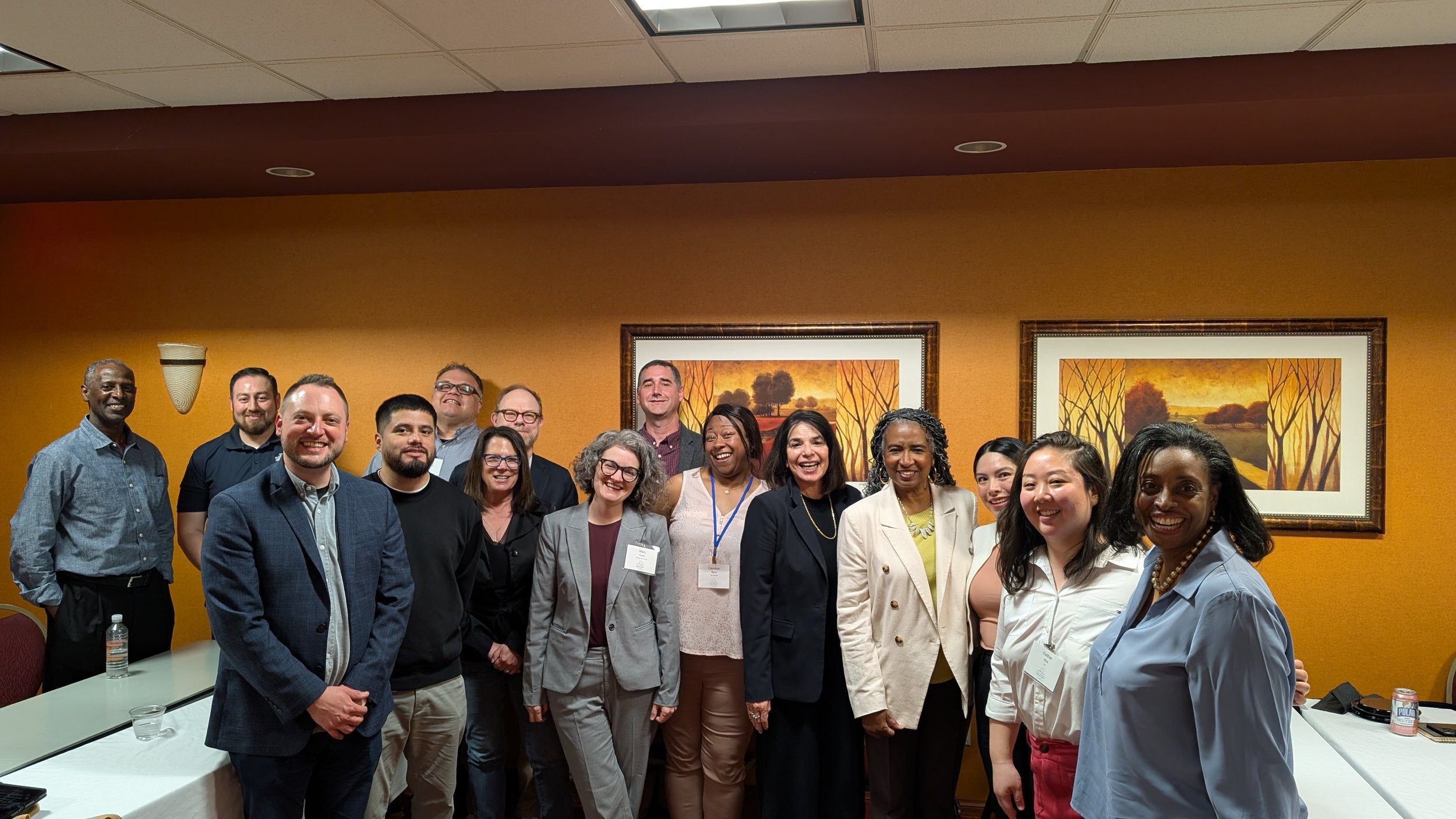
CJC hosted the first CEJA Table for Central Illinois at the Illinois Workforce Summit in Peoria on May 7, 2026. Representatives from the Chicago Jobs Council, DCEO, MBDC (Minority Business Development Center, Peoria), The Workforce Connection (Rockford), Hire360 (Chicago), the NIU Workforce Policy Lab, Illinois Power Agency (IPA), YWCA McLean County, DREEAM, One Level NFP, and Goodwill Northern Illinois gathered to discuss the shared goals and implementation of the clean energy workforce training programs.
Program Participant Barriers
Organizational participants (grantees) discussed barriers faced by program participants. Most locations in Central Illinois lack public transportation and some participants do not have access to vehicles. The CEJA Program provides Barrier Reduction Funding which allows for rideshares and car repairs, but currently cannot pay towards the purchase of a used vehicle. Many participants lack "tool literacy" and basic digital skills required for classroom success. These barriers will be addressed in the Bridge Program and in the clean energy training programs. At the end of the program, the period between training and placement can be long and difficult for participants due to the timing of opportunities. Grantees are seeking transitional or short-term employment for participants to help bridge the gap.
Program Needs
Grantees said that On the Job (OJT) training funds would be helpful to incentivize the participation of smaller employers in the CEJA workforce program. OJT funds have been difficult to access for CEJA grantees thus far. They would also like to see the definition of clean energy jobs expand beyond solar and HVAC to perhaps include Commercial Driver’s Licenses (CDL), since drivers are in demand. Many participants have experienced significant trauma; grantees expressed a need for training trauma-informed approaches. Additionally, many of the programs in Central Illinois are new to CEJA, so a map of the ecosystem would be helpful.
To engage and educate the community, grantees expressed an interest in hosting summer events such as the annual “Taste of Solar” event hosted in Dolton, Illinois. A model using city-owned properties for hands-on weatherization and repair training was also discussed.
Lastly, a stronger partnership with the Illinois Power Agency (IPA) could help connect CEJA graduates to mandated Equity Eligible Persons (EEP) opportunities with CEJA vendors.
Next Steps and Recommendations
For next steps, CJC will develop an ecosystem map for Central Illinois. CJC will also offer training to the Central IL CEJA Table on trauma-informed practices and invite IPA representatives to present at the CEJA Table.
Grantees will identify bridge employment opportunities with employers so participants can earn income and experience while seeking clean energy jobs.
CJC recommends that DCEO should consider allowing Barrier Reduction Funds (BRF) to be used for car deposits of approximately $2,500 in cases where transportation is a true barrier.
CJC is excited to support the success of clean energy workforce development in Central Illinois.