

As Illinois continues its transition to a clean energy economy, connecting skilled workers with employers is essential to ensuring that new opportunities reach the communities that need them most.
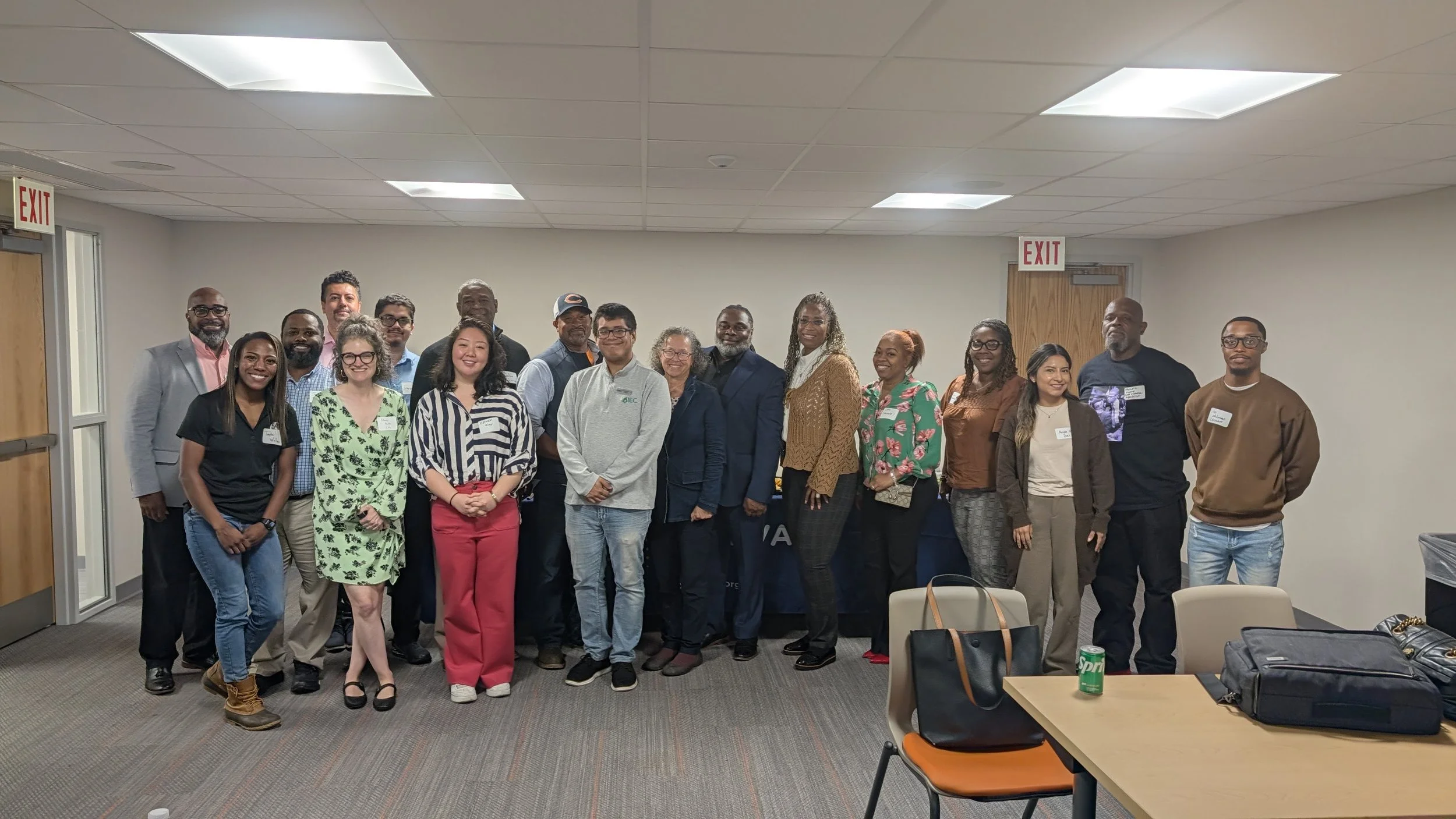
On September 30, Chicago Jobs Council (CJC), in partnership with Elevate Energy's CEJA Contractor Incubator, convened 27 workforce development professionals, contractors, and industry partners at the CEJA South Hub in Chicago. The gathering focused on strengthening partnerships between workforce training programs and clean energy employers, addressing hiring challenges, and ensuring workers have the skills needed to succeed in a rapidly evolving industry.
The event was part of CJC's ongoing efforts to support implementation of the Climate and Equitable Jobs Act (CEJA), landmark Illinois legislation designed to advance clean energy development while creating equitable access to jobs and economic opportunity.
Turning Workforce Partnerships Into Career Opportunities
A highlight of the convening was a panel discussion featuring Taylor Wallace, Employer Relations and Placement Manager at 548 Foundation, and Joseph Smith, electrical contractor and owner of ADL Solutions.
The two shared how their organizations are working together to connect clean energy trainees with hands-on experience and employment opportunities.
Their partnership includes a proposed one-megawatt community solar project on Chicago's South Side. Through grant-supported predevelopment work, ADL Solutions has created opportunities for participants from 548 Foundation to contribute to various aspects of the project, including engineering design support, community outreach, and site preparation.
Participants also gain practical experience assembling solar racking systems, preparing worksites, and learning the technical skills required for careers in the industry.
The partnership demonstrates how collaboration between workforce organizations and employers can help bridge the gap between classroom training and real-world employment.
But as the panelists emphasized, successful partnerships require more than simply matching graduates with available positions.
Building Relationships That Support Long-Term Success
One of the discussion's central themes was the importance of developing strong, ongoing relationships between workforce providers and employers.
Wallace emphasized a "not no, but not yet" approach to job placement, recognizing that employers' hiring needs and project timelines can change because of funding delays, weather conditions, and other factors.
Rather than treating an unavailable position as a missed opportunity, workforce organizations can maintain relationships with employers and prepare candidates for future openings.
Panelists also discussed the importance of providing continued support after participants complete training. Through case management, career tracking, and ongoing engagement, workforce organizations can help graduates navigate employment disruptions and remain connected to career opportunities.
For employers, these partnerships can also reduce administrative challenges, particularly when navigating grant requirements and documentation associated with hiring Equity Eligible Persons (EEPs).
Preparing Workers for an Evolving Clean Energy Industry
As clean energy technologies advance, workforce training programs must evolve alongside them.
During the convening, participants discussed the growing demand for skills extending beyond traditional solar installation, including electric vehicle charging infrastructure, battery storage, geothermal systems, and energy-efficient heating and cooling technologies.
Small-group conversations highlighted several priorities for workforce development programs:
Technical skills: Electrical theory, blueprint reading, conduit bending, and measurement proficiency.
Industry certifications: Credentials such as EPA 608 certification for HVAC and refrigeration work.
Transferable skills: Adaptability, project management, communication, and the ability to navigate changing project schedules.
Innovative training models: Mobile training labs, employer partnerships, and hands-on learning opportunities that respond to local workforce needs.
Participants also shared examples of organizations adapting their programs to meet emerging industry demands, from mobile weatherization training to career pathways in electric vehicle infrastructure and geothermal energy.
These conversations reinforced the need for workforce development organizations to remain responsive to employer needs while preparing workers for sustainable, long-term careers.
Collaboration Is Key to an Equitable Clean Energy Future
The convening underscored an important reality: Building an equitable clean energy economy requires more than investing in workforce training. It requires strong partnerships that connect training, employment, and long-term career advancement.
By bringing workforce organizations and employers together, CJC and Elevate Energy are helping create opportunities for collaboration, identify workforce challenges, and strengthen pathways into Illinois' growing clean energy sector.
CJC advocated for the passage of CEJA and continues to support its implementation by convening workforce development grantees, facilitating knowledge-sharing, and providing technical assistance.
As Illinois expands its clean energy investments, CJC remains committed to ensuring that these opportunities translate into meaningful employment, economic mobility, and lasting benefits for communities across the state.