

Make 2026 the Year Your Organization Recommits to Growth
by: Yolaine Jean, Director of Community and Capacity Building
2025 was the year that ended as it had begun – with uncertainty and disruption for organizations and communities. 2026 begins with the certainty that change is the only constant, and organizations and communities need to be ready to pivot, which is only possible through preparedness in personal and professional development.
At Chicago Jobs Council (CJC), we are regularly engaged in the discussion around development and impact. Through regular communication with our training participants, input from our member organizations, customized training requests, and convening for advocacy, we know firsthand that employees are eager to grow. We also know that the conditions to prioritize training and development are not easy to navigate. Whether it is a lack of time, resources, or organizational support, many professionals have found it challenging to do so.
As we navigate the new normal, 2026 tasks organizations to not just encourage staff to engage in professional development. It’s about creating the environment, investing the resources, and cultivating a culture that makes professional and personal growth possible for everyone.
Why Now?
In our fast moving, ever-changing ecosystems, information is changing rapidly, thereby requiring regular skill and knowledge development to keep up. Without intentional investment in professional development, organizations risk not having the up-to-date information needed to help employees and job seekers pivot to evolving demands.
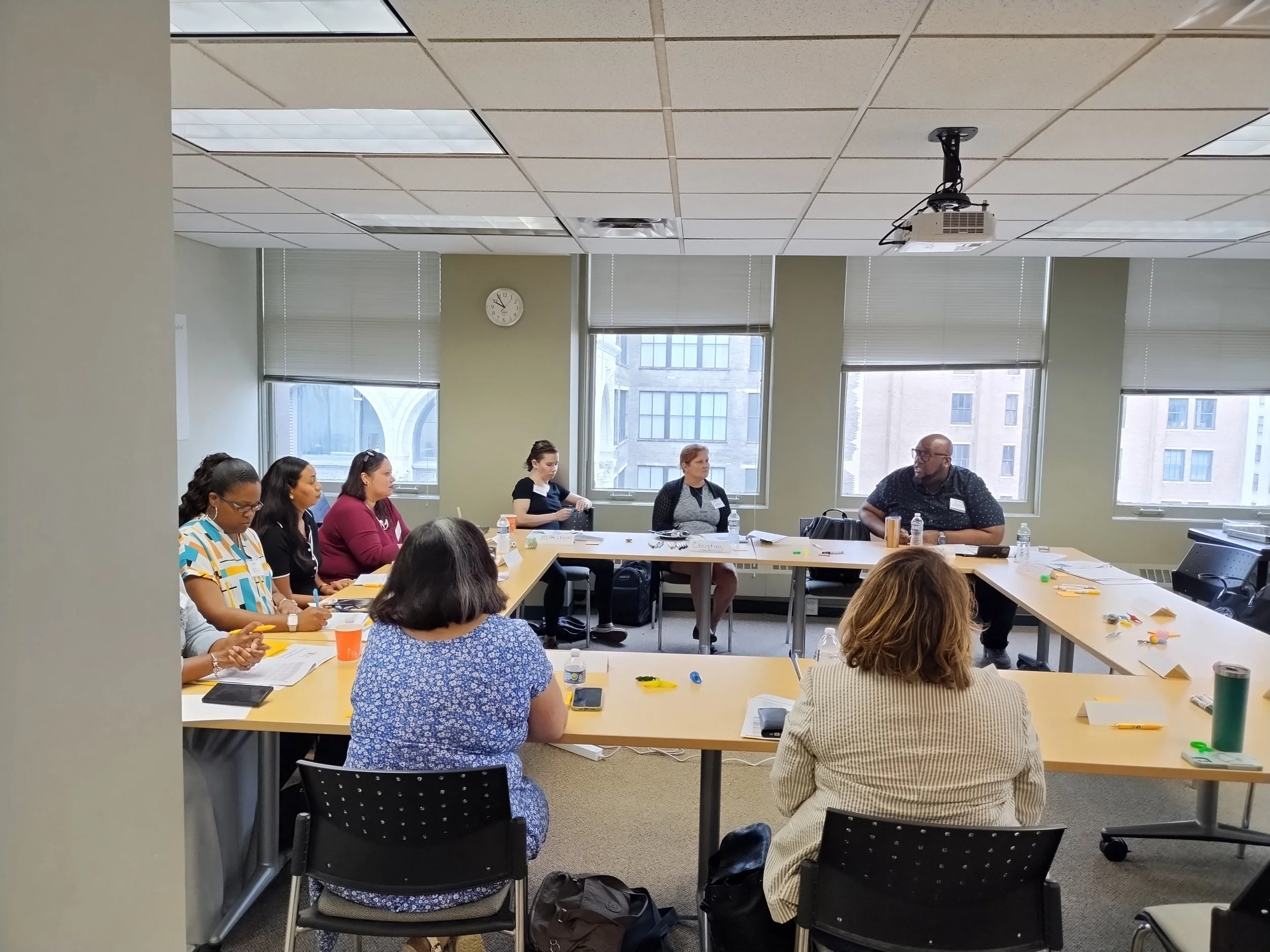
CJC public and customized training programs can support you in getting your team ready for their next challenge. Below are upcoming CJC programs (unless specified, they are open to all):
CJC Workforce Convo – SNAP Work Requirements: January 14, 2026
IDHS (only) – Conducting Quality Intake Assessments Virtual Training: January 15, 2026
IDHS (only) – Documentation of Case Notes Virtual Training: January 22, 2026
Public Training – Trauma Informed Care (In-Person) Training: January 27, 2026
Mindset Shifting
Instead of merely encouraging staff to learn on their free time, organizations can enable professional development by making it a core part of employee’s responsibilities.
Organizations can make the shift by:
Intentional time for professional development by allocating protected hours within work hours for training and skill development.
Role-specific skills development by ensuring that training programs are tailored to the needs of the role and aligned with future demands in the industry.
Ongoing learning conversations by incorporating development goals into regular performance reviews and encouraging opportunities to share skills development across the organization.
Strategies for Organizations
Organizations have the power to cultivate environments that prioritize and invest in learning, by:
Allocating a professional development budget by making learning a line item in your annual budget.
Offer learning autonomy and allow employees to choose courses, programs, or certifications that are relevant to their roles and career goals.
Fund shared learning experiences to build communities of expertise.
Block off time for travel to ensure that employees are not only engaged in virtual learning, but in- person too, to build networks and can focus on learning away from their desks.
Reward skill application, not only the completion of courses, but the application of newly acquired skills to the work at hand, as well.
Moving Forward
2026 offers organizations an opportunity to design a new future where professional growth is a built-in part of the employee experience. When learning becomes woven into the fabric of work, everyone benefits. This year can be the year where development is not an oversight, but a strategic priority.
The organizations that will see growth in 2026 are the ones that are able to pivot, through the agility of their knowledgeable staff. As we move into the new year, enabling staff development through intentional, well-designed, and organization-led policies, is not only an investment in people; it’s an investment in your future.
And we at Chicago Jobs Council would love to be a partner in supporting your organization’s growth. With our commitments to anti-racism, equitable workforce systems, and advocacy for the rights of workers, in Chicagoland and beyond, we can be the organization that helps solidify your commitment to employer and employee personal and professional growth.
It is through our strong networks and commitment to personal and professional growth that we build a strong Chicagoland workforce for all.
Further Reading:
Bhakuni, Seema & Saxena, Sandeep. (2023). Exploring the Link between Training and Development, Employee Engagement and Employee Retention. Journal of Business and Management Studies. 5. 173-180. 10.32996/jbms.2023.5.1.17.
Salas, Eduardo & Tannenbaum, Scott & Kraiger, Kurt & Smith-Jentsch, Kimberly. (2012). The Science of Training and Development in Organizations: What Matters in Practice. Psychological Science in the Public Interest. 13. 74-101. 10.2307/23484697.
